

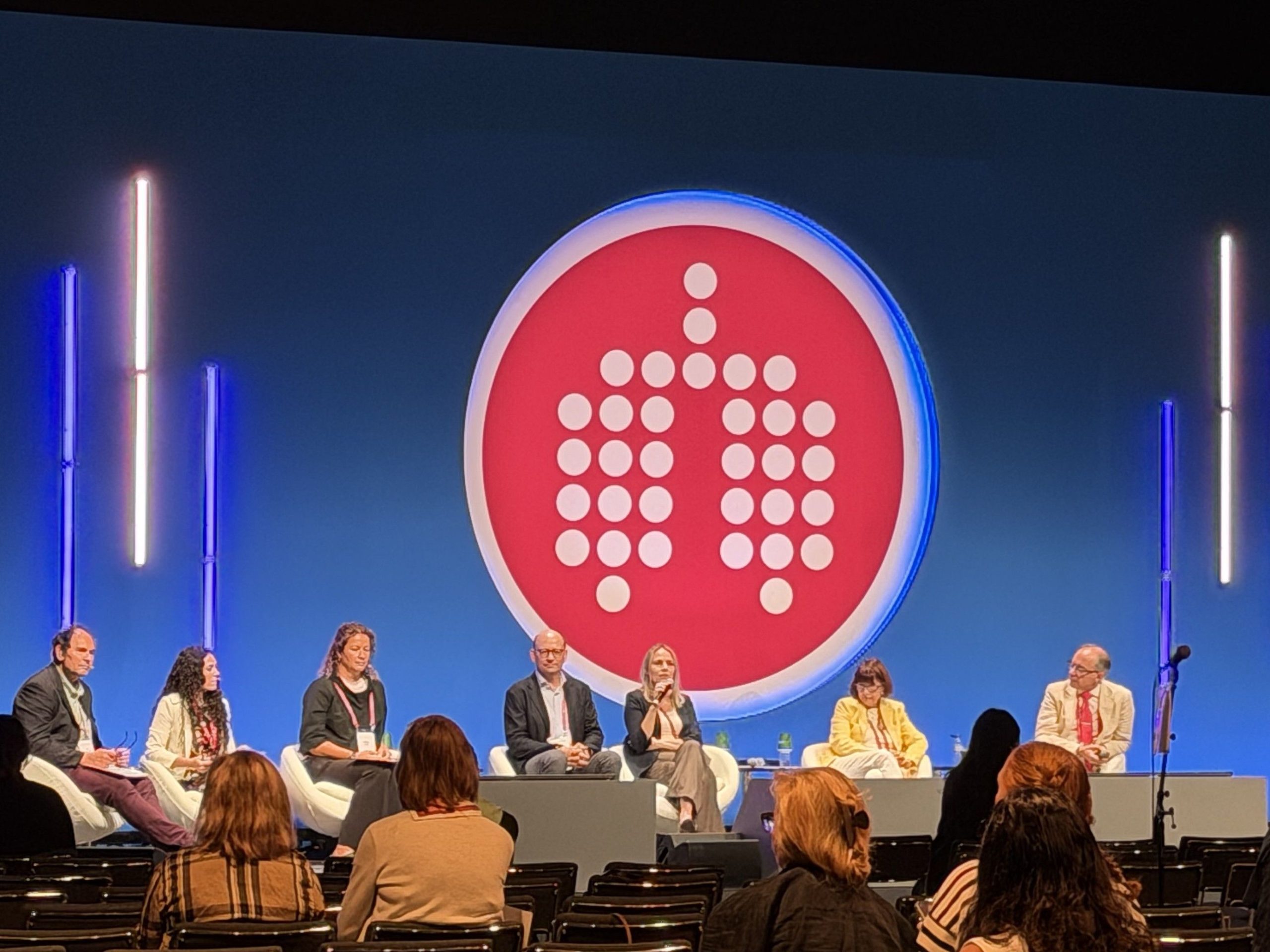
The annual Congress of the European Respiratory Society (ERS) is a highlight for anyone who has an interest in respiratory diseases and their diagnosis and treatment. This year, participants gathered in Barcelona on 5-9 September under the banner of ‘United for better breathing: the partnership between patients, clinicians and researchers.’
Hot Topic in the spotlight
The 2026 Congress saw a remarkable 5,170 speakers deliver 2,167 presentations across 342 sessions. We were particularly pleased that the Hot Topic session, “Rare respiratory diseases across the lifespan: tackling challenges through multidisciplinary collaboration”, was selected as a ‘top pick’ by ERS President Prof. Joanna Chorostowska-Wynimko. It was also the subject of a super write-up in Medscape: Advances in Care for Rare Pediatric Lung Diseases. Medscape is the leading online global destination for healthcare professionals, providing education and news to over 13 million users.
The Hot Topic session was submitted and chaired by Dr. Sara Cuevas Ocaña, one of our early-career researchers, and featured Centre co-director Prof. Stefan Marciniak and IAB member Prof. Marcus Mall. It highlighted the biological and clinical complexity of rare respiratory diseases across the lifespan. Speakers explained how multidisciplinary collaboration improves diagnosis, stratification and patient-centred care and presented emerging translational and data-driven approaches for advancing therapies and outcomes in rare respiratory diseases.
It’s great to see rare disease receiving this level of time and – more importantly – attention in an extremely crowded field. You’ll need an ERS login to watch the replay of our session but the Medscape article is free to access and well worth a read.
PCD on the agenda
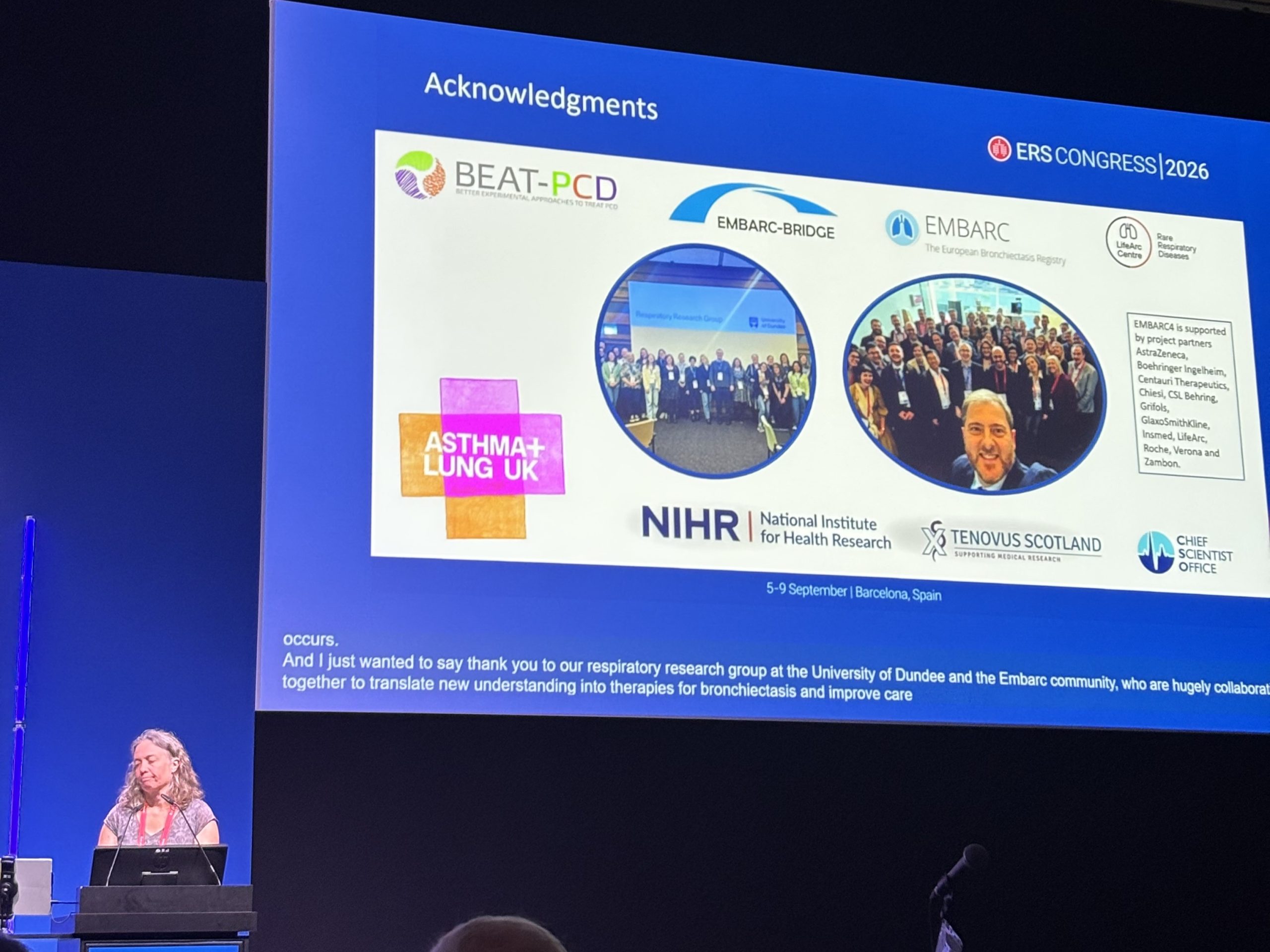
A dedicated session on Primary Ciliary Dyskinesia (PCD), one of our exemplar diseases, saw global experts including Dr. Stephanie Davis from USA and Prof. Heymut Omran from Germany present the latest in pathophysiology, clinical care and clinical trials. Prof. Amelia Shoemark presented on translating new understanding into new therapies for bronchiectasis. This included therapies relevant to people with PCD such as her work targeting Azurocidin-1 which is elevated in PCD. It was great to see the PCD guidelines work, which is led from the UK, being highlighted in the Best of ERJ session. You can watch a replay of these talks on the Congress website (ERS login required).
In the poster sessions, Dr. Erin Cant presented work carried out during her PhD, before she joined the Centre, that looked at mucociliary clearance in bronchiectasis in the upper and lower airways. This included the identification of PCD patients in an adult bronchiectasis population using high-speed video microscopy, which is relevant to the Centre’s work on PCD.
In terms of networking and collaboration, ERS participants had access to a PCD-focused clinical research consortium consisting of scientists, clinicians and healthcare professionals chaired by Amelia, co-lead of our work package on biobanking and patient registries. Members of our LifeArc Centre had the opportunity to meet and discuss science with the wider PCD community at the BEAT-PCD management meeting and drop-in sessions at the bronchiectasis pavilion, which has given rise to new project plans with global reach.
Insights into cystic and fibrotic lung diseases
Our Centre’s team was flying the flag for rare in other sessions too. Prof. Simon Johnson participated in an Ask the Expert panel on cystic lung disease which discussed the differential diagnosis of cystic lung disease and the management of LAM in a case-based format. The session will be made available on the education section of the ERS website in due course.
As well as presenting, Dr. Sara Cuevas Ocaña shared research in the poster sessions. Her first poster showed work she had carried out before joining the Centre, on how to use base editing and CRISPR-Cas9 in pluripotent stem cells to model lung disease, specifically idiopathic pulmonary fibrosis.
Sara also presented updates on the two modelling projects she has been working on since she joined the Centre in 2025. She showed the models of pulmonary fibrosis she generated in the lab of Dr. Jenny Dickens and how she adapted them to a high-throughput platform. Together with collaborators from the Centre, the team has just finished performing the Centre’s first drug screening, which consisted of testing 1,500 drugs that have been approved by the FDA for other conditions. This process identified 84 compounds that show promise for the treatment of pulmonary fibrosis and which will be evaluated in more detail.
Sara also presented laboratory models of Birt-Hogg-Dubé syndrome that she generated in Stefan Marciniak’s lab. These models are helping us understand this disease better. She is currently adapting them for screening against the same 1,500 FDA-approved drugs with a view to identifying potential treatments for Birt-Hogg-Dubé syndrome patients.
Global Voices 2026
The ERS has a strategic focus on strengthening relationships between patients and respiratory professionals. The theme of this year’s Congress, “United for better breathing”, emphasised that the partnership between patients, clinicians and researchers should involve:
- Co-creating care: patients should be treated as equal partners and empowered to actively shape their care through shared decision-making and mutual respect
- Listening first: identifying and acting on unmet needs by prioritising patient voices to uncover real-world challenges and guide meaningful change
- Discovering together: advancing science through collaborative research that unites patients, clinicians, and researchers to promote a pipeline from discovery to improved health
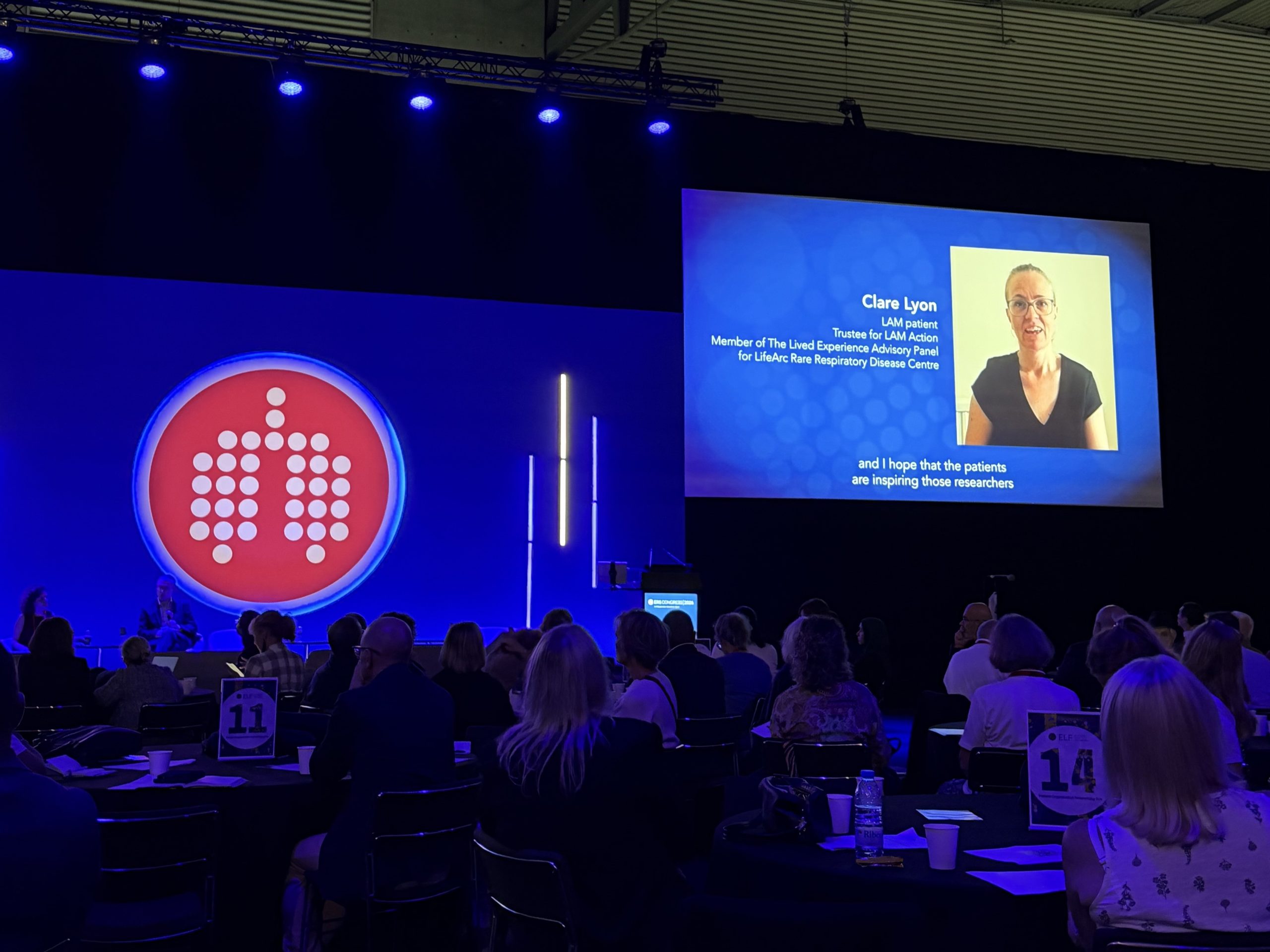
Like the ERS, we do our best to co-create, listen and discover with our patient partners in our day-to-day activities. That’s why we were particularly pleased to learn that Clare Lyon, of the charity LAM Action and our own Lived Experience Advisory Panel, had taken the initiative to share her experience of working with the Centre through the European Lung Foundation’s “Global Voices 2026”.
Clare’s video testimonial was featured during an ERS Congress session and she also shared this text as part of her submission:
“I am fortunate enough to be part of the LifeArc Rare Respiratory Disease Centre, which is committed to accelerating the discovery and development of life-changing therapies, and creating pathways to deliver these treatments to people living with rare respiratory diseases. The Centre brings together patients, researchers, clinicians and industry to turn scientific discoveries into real-life solutions. Since joining the project in early 2025, I’ve found that the Centre really cares about the patient voice and the partnership between patients on the Lived Experience Advisory Panel and the clinicians and researchers is excellent. It’s not just a PPIE tick box exercise. Patients are involved in all aspects of the project helping to shape the research journey. I am really hopeful that the Centre’s research will change the lives of those living with rare respiratory diseases much more quickly and effectively than in the past.”
We look forward to building even stronger connections with patient partners in the coming years, and to showcasing the benefits of those connections at future editions of the ERS Congress.
“It was a great pleasure seeing the Hot Topic session coming to life and seeing how clinicians, patient representatives, researchers and other key players interacted and shared their views on the challenges of managing rare diseases worldwide and how we can all contribute to an improvement in the landscape of rare diseases.
It was very exciting to share my LifeArc-funded work on modelling rare lung diseases for drug screenings. People working on similar and complementary drug screenings visited my poster, gave me very useful insights into the validation steps and therapeutic potential of this type of research. I was also able to explain details of my approaches to develop these models to attendees who were planning to undertake similar modelling projects, and exchange very helpful reagent information with experienced people in the field. Overall, it was a fantastic opportunity to exchange research information with people working inside or outside the field of rare diseases and I felt that the work was highly valued for the purpose of drug discovery.“
“I enjoyed attending the ERS Congress 2026 as it is always a great place to network and brainstorm ideas whilst discussing your research. I attended the BEAT-PCD management meeting on the opening day of the Congress. It was really interesting to see to work being carried out across Europe on Primary Ciliary Dyskinesia (PCD). It was really promising to see rare respiratory conditions highlighted throughout the conference and was great to see the steady increase in PCD research being shared over the last few years at the ERS Congress. I also was able to discuss aspects of my work within the LifeArc Centre with respiratory experts from around the globe and gain insights into their research practice which I could use to implement in my own work.“