We care about rare
Millions of people are affected by common respiratory conditions like Chronic Obstructive Pulmonary Disease (COPD), asthma and tuberculosis. So why are we focusing our time, energy and resources on rare respiratory diseases?
What is a respiratory disease?
Respiratory diseases affect the lungs and airways and commonly cause symptoms like breathlessness, wheezing, laboured breathing, coughing and problems clearing mucus. They are also known as lung diseases or pulmonary diseases. There are many different respiratory diseases, ranging from very common conditions that affect many millions of people to the rare and ultra-rare conditions that we study.
Our lungs and airways are vital because they enable us to breathe in fresh air, breathe out carbon dioxide and get oxygen moving around our bodies. Every part of our body needs oxygen to function so our health suffers when our lungs or airways aren’t working properly. Our respiratory system also performs other vital tasks, like clearing mucus and protecting us from breathing in harmful substances.
What is a rare disease?
A disease is called ‘rare’ if it affects fewer than 1 in 2,000 people. Some rare diseases only affect a handful of people. It is estimated that there are more than 7,000 rare diseases and that several hundred of them are respiratory conditions.
When you add these different rare diseases together, they aren’t so rare after all. In fact, the England Rare Diseases Action Plan 2025 estimates that around 1 in 17 people will be affected by a rare disease at some point in their lives.
Why focus on rare diseases?
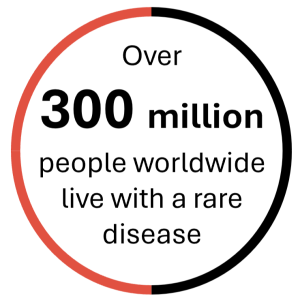
We care about rare because we care about people. Around 300 million people around the world live with a rare disease. All of them have the same right to be valued and cared for as any other person.
We work on rare because these diseases have a serious impact. Individually, they affect the day-to-day quality of life of the patient and their loved ones. Together, they have significant social and economic costs for society.
Finally, we’re excited about rare because the time is right. Advances in disease modelling, drug development and genetics are creating new opportunities to understand, treat and possibly even cure these conditions.
Which diseases are you working on?
Our initial focus is on three exemplar rare respiratory diseases that represent diverse but overlapping challenges seen across many rare respiratory diseases: rare cystic lung diseases (rare CLD), rare interstitial lung diseases (rare ILD), and primary ciliary dyskinesia (PCD).
These conditions provide good examples of the challenges that are found across many rare respiratory diseases. Between them, they can affect people of all ages. They present similar obstacles in terms of diagnosis, modelling and treatment. Patients are often faced with long and difficult diagnostic journeys and a lack of targeted therapies. On a more positive note, engaged patient-advocacy groups, existing data and early research models provide a solid base to build on.
We will focus on these conditions during an initial five-year phase. After that, we hope to use the knowledge we have gained to also tackle other rare lung conditions.
What are the challenges of working on rare diseases?
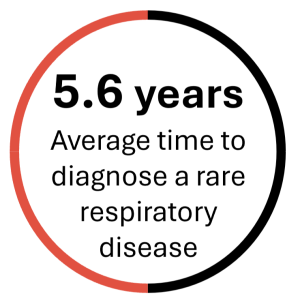
Diagnosing a rare disease can take a long time. Most GPs and clinicians rarely see people with rare diseases, which means they can lack the training and experience required to diagnose them quickly. Rare diseases can share symptoms with common diseases and specialist testing can be expensive or difficult to access. This is a significant problem because patients can face worsening health, mis-diagnoses, incorrect treatments and extensive testing while they wait for an answer.
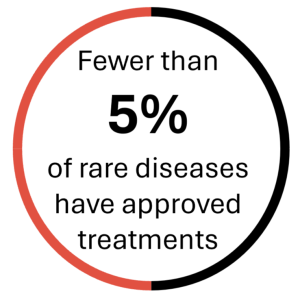
Even when a patient has a diagnosis, about 95% of rare diseases don’t have an effective treatment. Developing and testing new treatments for any disease is difficult, expensive and takes time. For rare diseases, it is especially challenging. That’s because there are only a few people with the condition (or sometimes just a single patient), which makes it difficult to access research funding, do the research, run effective clinical trials and gain regulatory approval for new treatments. Sometimes, a treatment has been found but people can’t access that treatment because it’s too expensive to meet standard NHS funding rules.
How are you addressing these challenges?
We’re creating community and momentum around the diagnosis and treatment of rare lung diseases. Our Centre brings together patients, families and carers, clinical experts, researchers, investors and industry partners from across the UK. We believe that by working together, we can do more and make faster progress.
“We wholeheartedly welcome the Centre as an opportunity to raise the profile of rare diseases like lymphangioleiomyomatosis, reduce diagnostic errors, and enable the development of treatments for a currently incurable condition that almost exclusively affects women.”